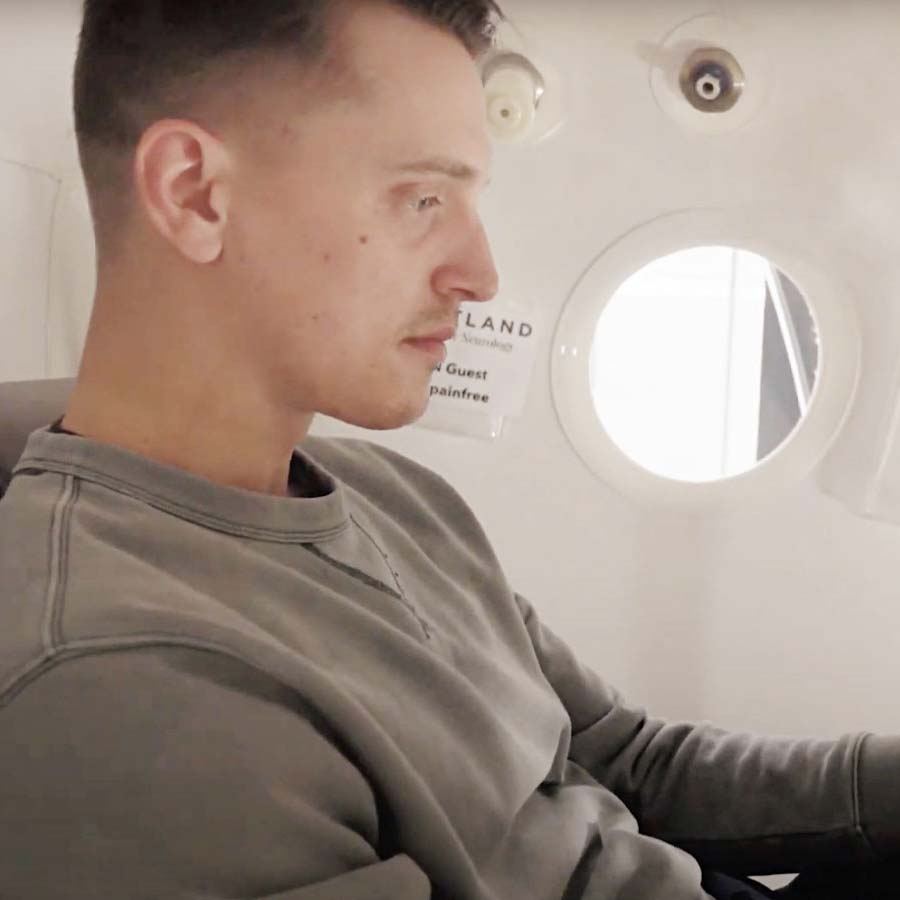
We are born with billions of brain cells that communicate through an extraordinary network of connections. Throughout our lives, we learn, adapt, and recover by strengthening and creating new connections between these neurons. The healthier and more connected our brain is, the faster and more accurately it can communicate with the rest of the body. This remarkable ability to reorganize and repair itself is known as neuroplasticity, and Hyperbaric Oxygen Therapy (HBOT) helps create the ideal environment for that healing process to occur.
During a concussion, the brain rapidly accelerates and decelerates within the skull. Although the skull may remain intact, the delicate connections between brain cells (axons) are stretched and sometimes torn. Imagine the branches of a tree after a violent storm. While damaged, they are still capable of growing back—but only if they have the resources they need. In the brain, those resources are primarily oxygen and glucose, which together produce the energy required for repair.
This is where Hyperbaric Oxygen Therapy becomes unique.
Under normal conditions, nearly all of the oxygen we breathe is carried by our red blood cells. The challenge is that these cells are already close to fully saturated with oxygen, so simply breathing more oxygen does very little to increase how much reaches injured tissue. HBOT changes the physics of oxygen delivery by increasing both atmospheric pressure and oxygen concentration. As pressure increases, large amounts of oxygen dissolve directly into the plasma—the liquid portion of our blood—allowing oxygen to travel independently of red blood cells.
This process is explained by Henry’s Law, which states that increasing pressure allows more oxygen to dissolve into a liquid. The result is a dramatic increase in dissolved oxygen—up to 1,200% above normal plasma levels—which allows oxygen to diffuse farther into injured tissues, even in areas where blood flow has been reduced by concussion. Rather than relying solely on red blood cells to transport oxygen, the plasma itself becomes a powerful delivery system, bathing injured brain tissue in the oxygen needed to produce energy and begin repairing damaged connections.
One of the biggest challenges after a concussion is what researchers call the brain’s energy crisis. Following injury, brain cells require enormous amounts of energy to repair themselves, yet blood flow often decreases while inflammation increases. This creates the perfect storm: the brain needs more oxygen than ever, but receives less of it.
On a normal day, the brain consumes nearly 20% of the body’s oxygen despite making up only about 2% of our body weight. After injury, those energy demands rise substantially. Hyperbaric Oxygen Therapy is the only treatment capable of dramatically increasing the amount of oxygen dissolved directly into plasma, allowing significantly more oxygen (up to 1200%) to reach injured brain tissue than is possible through normal breathing or even supplemental oxygen alone.
Concussions also disrupt the delicate balance of sodium, potassium, and calcium inside and outside brain cells. These electrolyte shifts force the brain’s sodium-potassium pumps to work overtime in an attempt to restore normal function, dramatically increasing the brain’s energy demands. At the same time, excessive calcium entering injured neurons can activate damaging biochemical pathways that contribute to further cellular injury if not corrected. Simply put, the injured brain desperately needs energy, and oxygen is the critical ingredient for producing it.
Inflammation adds another obstacle. Swelling within the brain and microscopic damage to blood vessels reduce circulation, slow communication between neurons, and interfere with normal brain function. Hyperbaric Oxygen Therapy has been shown to reduce neuroinflammation, decrease edema, improve microcirculation, and support healthier neurotransmitter function. As swelling decreases and blood flow improves, brain cells are better able to communicate, repair themselves, and restore normal neurological function.
Perhaps most exciting is that HBOT doesn’t simply increase oxygen levels during treatment—it initiates a cascade of healing responses that continue long afterward. Research has shown that hyperbaric oxygen therapy can stimulate angiogenesis (the growth of new blood vessels), mobilize stem cells, support neuroplasticity, reduce inflammation through changes in gene expression, improve mitochondrial energy production, and enhance the brain’s ability to repair and reorganize damaged neural networks.
When delivered at medical-grade, deep-pressure protocols, Hyperbaric Oxygen Therapy has been shown to support healing by:
- Increasing dissolved plasma oxygen by up to 1,200%
- Stimulating the growth of new blood vessels (angiogenesis)
- Improving microcirculation to injured brain tissue
- Mobilizing stem cells (up to eight-fold in some studies)
- Reducing inflammation and swelling
- Supporting neuroplasticity and neural repair
- Improving mitochondrial energy production
- Helping regulate autonomic nervous system function
- Supporting immune function
- Promoting healthier sleep, reduced stress, and overall recovery
The remarkable thing about the brain is that it wants to heal. The challenge after a concussion is often not the brain’s ability to recover—it’s having enough energy and the right biological environment to do so. By dramatically increasing oxygen delivery while simultaneously reducing inflammation and stimulating the body’s own repair mechanisms, Hyperbaric Oxygen Therapy helps provide exactly what the injured brain needs to rebuild connections, restore communication, and return to optimal function.