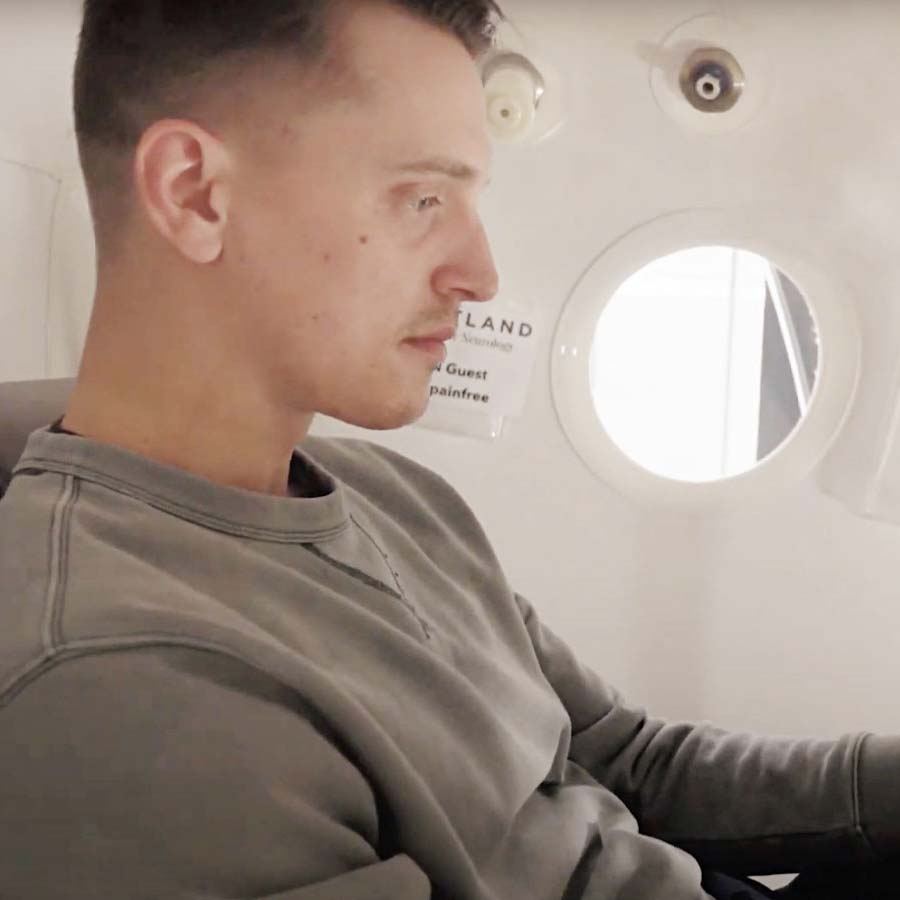
POTS, dizziness, and a racing heart all have something important in common: the brain needs a consistent supply of blood and oxygen to function normally. There are many potential causes for these symptoms, including cardiovascular and structural problems that need to be appropriately evaluated. But in concussion, Long COVID, and other forms of dysautonomia, the problem can involve disrupted neurological signaling between the brain, autonomic nervous system, blood vessels, and cardiovascular system.
This is where Hyperbaric Oxygen Therapy becomes particularly interesting. By substantially increasing oxygen availability while supporting autonomic function, cerebral circulation, cellular energy production, vascular health, and neuroplasticity, Hyperbaric Oxygen Therapy can help create the biological environment the brain and nervous system need to heal and regain healthier regulation.
Clinically, we’ve repeatedly seen improvements in blood pressure and heart rate with hyperbaric oxygen therapy — two mechanisms that work together to maintain healthy blood flow to our body and brain. Whether struck by lightning, concussion, long-covid, post-surgical, viral, or other causes of POTS, dizziness, brain fog, fatigue, or a racing heart, Hyperbaric oxygen therapy may help.
One patient we’ve treated developed significant autonomic dysfunction after being struck by lightning. Initially, his blood pressure was considerably elevated and his heart rate increased dramatically upon standing—well beyond the 30-beat-per-minute increase commonly used as part of the diagnostic criteria for POTS in adults. Over the course of Hyperbaric Oxygen Therapy, we’ve seen his blood pressure progressively return toward a healthier range, while his heart-rate response to standing has become significantly more stable and no longer increases anywhere near his initial response. Along with these objective changes, we’ve seen improvements in his symptoms, function, and overall quality of life.
His story is certainly unusual, but the physiology isn’t. Whether the disruption begins with concussion, Long COVID, viral illness, surgery, or another injury to the nervous system, healthy autonomic regulation is essential for maintaining blood pressure, heart rate, circulation, and ultimately consistent blood flow and oxygen delivery to the brain.
After a concussion, we expect symptoms like headaches, dizziness, brain fog, or difficulty concentrating. But many patients begin experiencing symptoms that seem to have nothing to do with hitting their head. Their heart races when they stand up. They become lightheaded or feel like they might pass out. Exercise that used to feel easy suddenly leaves them exhausted, shaky, nauseated, or needing to lie down. They may become unusually sensitive to heat, struggle with sleep or digestion, or experience strange surges of adrenaline even when they don’t feel psychologically anxious.
Interestingly, we see many of these same symptoms in patients with Long COVID. People who previously exercised, worked, traveled, and functioned normally can suddenly develop brain fog, overwhelming fatigue, exercise intolerance, dizziness, heart racing, sleep problems, and difficulty standing for long periods following a viral illness.
At first, concussion and Long COVID may seem like completely different problems. But when we look deeper at the physiology, there are some important similarities. Both can affect autonomic regulation, cerebral blood flow, inflammation, mitochondrial energy production, vascular function, and the brain’s ability to efficiently regulate the body.
Rather than targeting only one symptom, Hyperbaric Oxygen Therapy supports many of these biological systems simultaneously.
Your Brain Is Constantly Regulating Your Body
The brain doesn’t just control our thoughts, memory, vision, and balance. It also helps regulate heart rate, blood pressure, circulation, breathing, digestion, body temperature, sleep, and many of the automatic functions that keep our internal environment stable.
Much of this regulation occurs through the autonomic nervous system.
Two major parts of this system are the sympathetic and parasympathetic nervous systems. The sympathetic system helps increase heart rate, blood pressure, alertness, and energy availability when our body needs to respond to a challenge—the familiar “fight-or-flight” response. The parasympathetic system is more closely associated with digestion, recovery, sleep, energy conservation, and “rest-and-recovery.”
We need both.
Healthy autonomic function isn’t about eliminating sympathetic activity or maximizing parasympathetic activity. It’s about balance and adaptability—the ability to appropriately shift between the two depending upon what our body needs.
Following concussion, that regulation can become disrupted. A 2026 Mayo Clinic review describes dysautonomia as an increasingly recognized complication of concussion. The same problem is increasingly recognized following COVID-19, where autonomic dysfunction, orthostatic intolerance, and POTS have been associated with palpitations, fatigue, dizziness, brain fog, exercise intolerance, and difficulty standing.
In other words, two very different injuries—a mechanical brain injury and a systemic viral illness—can ultimately disturb some of the same regulatory networks.
Hyperbaric Oxygen Therapy becomes particularly relevant here because it influences more than oxygen levels alone. Human research has demonstrated that hyperbaric oxygen exposure can increase parasympathetic activity, directly demonstrating an effect on autonomic physiology.
That’s an important connection. Hyperbaric Oxygen Therapy is interacting with one of the major neurological systems responsible for regulating heart rate, circulation, digestion, recovery, sleep, and the body’s response to stress.
Why Can Standing Up Suddenly Become Difficult?
Standing seems simple, but physiologically, quite a lot has to happen.
When you’re lying down, blood is distributed relatively evenly throughout your body. The moment you stand, gravity pulls blood toward your legs and abdomen. Normally, your autonomic nervous system immediately recognizes this change. Blood vessels constrict, heart rate adjusts, blood pressure is maintained, and circulation is redistributed so enough blood continues reaching your brain.
You never even notice it happening.
But after concussion—or in some patients with Long COVID—that automatic regulation can become disrupted. Blood may pool more readily in the lower body. Heart rate may increase excessively in an attempt to compensate. Blood pressure may fluctuate, and the brain may have greater difficulty maintaining the circulation it needs.
This can produce:
- dizziness or lightheadedness
- racing heart or palpitations
- brain fog
- weakness or heavy legs
- nausea
- shakiness or internal vibration
- visual changes
- fatigue
- feelings of adrenaline or anxiety
- exercise intolerance
- near-fainting or fainting
This type of orthostatic intolerance can occur after concussion and is also well described in Long COVID. Some patients develop a pattern that meets the criteria for Postural Orthostatic Tachycardia Syndrome, or POTS.
The important question then becomes: what does the nervous system need in order to regulate this response more effectively?
Autonomic regulation requires healthy brain function, adequate cellular energy, vascular responsiveness, and communication between neurological networks. Hyperbaric Oxygen Therapy substantially increases oxygen availability while supporting cellular energy production, vascular biology, inflammatory regulation, neuroplasticity, cerebral perfusion, and parasympathetic activity.
We’re supporting many of the fundamental systems involved in healthier autonomic regulation and recovery.
The Brain Also Has to Regulate Its Own Blood Supply
There’s another important part of this story called cerebral autoregulation.
Our brain is incredibly energy hungry. Although it represents only about 2% of our body weight, it consumes roughly 20% of the body’s oxygen at rest. That oxygen is delivered through our circulation and used by mitochondria to produce ATP—the cellular energy our neurons require to function, communicate, and heal.
The brain therefore has to constantly regulate its own blood supply.
When we stand, exercise, read, solve a problem, or navigate a busy environment, the brain continually adjusts circulation to match the metabolic demands of different neurological networks. Following concussion, cerebral blood-flow regulation can become disrupted. Long COVID research points toward similar problems involving microvascular and immune dysfunction.
This gives us an important relationship:
Autonomic Regulation → Circulation → Cerebral Blood Flow → Oxygen → Energy → Brain Function
And this is one of the areas where Hyperbaric Oxygen Therapy directly changes the biological environment.
Under increased atmospheric pressure, Hyperbaric Oxygen Therapy dramatically increases the amount of oxygen dissolved directly into the plasma. This allows significantly more oxygen to circulate and diffuse into tissues. Research in traumatic brain injury has directly measured increased brain-tissue oxygenation and changes in cerebral metabolism following Hyperbaric Oxygen Therapy.
Long COVID research has demonstrated measurable changes in brain perfusion as well. In a randomized, double-blind, sham-controlled trial, 40 Hyperbaric Oxygen Therapy sessions resulted in improvements in cognitive function, fatigue, sleep, psychiatric symptoms, and pain. Brain imaging also demonstrated increased perfusion and neuroplasticity in regions associated with cognitive and emotional function.
That’s an important finding because Hyperbaric Oxygen Therapy isn’t simply increasing oxygen while someone is inside the chamber. Repeated treatments can create measurable changes in how the brain is functioning and being perfused.
Why Exercise Can Suddenly Feel Terrible
Exercise challenges nearly every part of the autonomic nervous system.
Your heart rate has to increase. Blood pressure has to adjust. Blood vessels have to appropriately constrict and dilate. Breathing increases. Body temperature rises. Muscles require more oxygen, while the brain simultaneously has to maintain its own circulation.
Before a concussion or COVID infection, all of this may have happened effortlessly. Afterward, those same demands can overwhelm a nervous system that is no longer regulating the body efficiently.
That’s why someone who exercised five days a week before their illness or injury may suddenly find that walking uphill causes heart racing, dizziness, nausea, brain fog, headaches, or overwhelming fatigue.
The problem may not simply be physical conditioning. It may be how the nervous system, circulation, metabolism, and energy systems are responding to the demands of exercise.
Long COVID brings another important concept into this discussion: post-exertional symptom exacerbation, where relatively modest physical or cognitive exertion can significantly worsen symptoms afterward. This means exercise progression needs to be individualized rather than assuming that simply pushing harder will improve conditioning.
Energy is central to all of this.
Healing requires energy. Exercise requires energy. And producing large amounts of cellular energy requires oxygen.
Hyperbaric Oxygen Therapy supports this process by dramatically increasing oxygen availability and supporting mitochondrial and vascular function. In the Long COVID randomized trial, fatigue improved following a 40-session Hyperbaric Oxygen Therapy protocol along with cognitive, sleep, and other symptom domains. A 2024 review of Hyperbaric Oxygen Therapy for Long COVID also reported improvements across studies in areas including fatigue, cognition, quality of life, neuropsychiatric symptoms, and cardiopulmonary function.
Hyperbaric Oxygen Therapy can also work alongside neurological and autonomic rehabilitation. Rehabilitation provides the nervous system with specific stimuli to encourage adaptation and neuroplasticity, while Hyperbaric Oxygen Therapy provides oxygen and supports the metabolic, vascular, and neurological environment required to carry out those changes.
Functional or Chiropractic Neurologists, neurologically focused Physical and Occupational Therapists, and Optometrists specializing in neurological visual rehabilitation can all play important roles in identifying and rehabilitating the specific neurological systems involved.
Why Dizziness Isn’t Always an Inner-Ear Problem
Dizziness after concussion or Long COVID is another perfect example of why we have to think about the brain and body as an integrated system.
Sometimes dizziness comes from the vestibular system. Sometimes it comes from visual dysfunction, neck injury, sensory mismatch, or impaired spatial processing.
But sometimes dizziness is related to circulation and autonomic regulation.
If standing causes heart rate, blood pressure, vascular tone, or cerebral blood flow to respond abnormally, the brain may struggle to maintain the circulation and energy required for healthy function. A patient may experience this as lightheadedness, spaceyness, visual changes, imbalance, or dizziness.
This distinction matters because treating all dizziness as though it is simply an inner-ear problem misses an important part of the picture.
Hyperbaric Oxygen Therapy can support this part of recovery through several overlapping mechanisms: increasing oxygen availability, supporting cerebral metabolism, influencing vascular function and angiogenesis, reducing inflammatory signaling, and supporting neuroplasticity.
And in Long COVID, we have randomized clinical research demonstrating increased cerebral perfusion following Hyperbaric Oxygen Therapy alongside improvements in cognition, fatigue, and other symptoms.
Inflammation, Blood Vessels, and Energy Are All Connected
Concussion produces inflammation as part of the normal response to injury. Long COVID can involve persistent immune and inflammatory dysfunction as well as endothelial and microvascular abnormalities.
These aren’t necessarily isolated problems.
Inflammation can affect blood vessels. Blood vessels affect oxygen delivery. Oxygen delivery affects mitochondrial energy production. And energy availability affects how well neurological networks function and repair.
The autonomic nervous system also communicates extensively with the immune system.
So instead of thinking about inflammation, poor circulation, brain fog, dysautonomia, and fatigue as five completely separate problems, we can begin to understand them as interconnected pieces of a larger biological system.
This is where Hyperbaric Oxygen Therapy is fundamentally different from therapies designed to target one individual pathway.
Hyperbaric Oxygen Therapy can simultaneously influence:
- tissue oxygen availability
- mitochondrial energy production
- cerebral and systemic circulation
- angiogenesis and vascular repair
- inflammatory signaling
- stem and progenitor cell mobilization
- neuroplasticity
- autonomic and parasympathetic function
The body doesn’t heal one system at a time.
Creating a healthier biological environment allows multiple systems involved in recovery to work together.
Long COVID Gives Us Important Clinical Evidence
The Long COVID research is particularly useful because it gives us controlled human evidence in a population experiencing many of the same symptoms we see in post-concussion dysautonomia: brain fog, fatigue, dizziness, exercise intolerance, sleep disturbance, and autonomic-type symptoms.
In the 2022 randomized, double-blind, sham-controlled trial, patients with post-COVID symptoms lasting at least three months received 40 Hyperbaric Oxygen Therapy sessions or sham treatment. Hyperbaric Oxygen Therapy significantly improved measures of cognition, energy, sleep, psychiatric symptoms, and pain, while brain imaging demonstrated changes consistent with increased perfusion and neuroplasticity.
Researchers later followed patients from that cohort and found that improvements in quality of life, sleep, psychiatric symptoms, and pain remained evident more than a year after the treatment course.
There is even evidence of cardiovascular effects. A separate randomized, sham-controlled Long COVID study found improvement in global longitudinal strain, a measure of myocardial function, in patients who had impaired function before treatment.
These studies reinforce an important concept: Hyperbaric Oxygen Therapy appears to work through repeated biological signaling and adaptation. Protocol, pressure, number of sessions, patient selection, and the underlying physiology all matter.
Protocol matters. Biology matters. And understanding what we are trying to change matters.
Hyperbaric Oxygen Therapy and Parasympathetic Function
Autonomic regulation remains one of the most interesting parts of this story.
Human research has demonstrated that Hyperbaric Oxygen Therapy can produce a marked increase in parasympathetic activity compared with hyperbaric pressure alone. That’s particularly relevant because parasympathetic function plays an important role in heart-rate regulation, digestion, recovery, sleep, circulation, and the body’s ability to transition out of a prolonged sympathetic stress response.
This tells us that Hyperbaric Oxygen Therapy is influencing more than oxygen levels.
It is interacting with one of the major neurological systems responsible for regulating the entire body.
When we combine that with the Long COVID research demonstrating improvements in brain perfusion, cognition, fatigue, sleep, and quality of life, along with the traumatic brain injury research demonstrating changes in brain-tissue oxygenation and cerebral metabolism, the physiological picture becomes increasingly compelling.
Creating the Environment for the Entire System to Recover
This is ultimately how we think about Hyperbaric Oxygen Therapy in patients dealing with concussion, Long COVID, dysautonomia, POTS-like symptoms, dizziness, and exercise intolerance.
We’re trying to improve the biological environment surrounding the systems responsible for regulating all of them.
The brain has to heal. Neural networks have to reorganize. Autonomic pathways have to regain adaptability. Blood vessels have to deliver oxygen where it’s needed. Mitochondria have to produce energy. Inflammatory processes have to appropriately regulate. The sympathetic and parasympathetic systems have to communicate effectively.
That requires oxygen, energy, circulation, and neuroplasticity.
Hyperbaric Oxygen Therapy allows us to support several of those fundamental processes simultaneously rather than chasing one symptom or one pathway at a time.
The Brain and Body Are Not Separate
This may be the most important message for someone experiencing these symptoms after concussion or Long COVID.
A racing heart doesn’t necessarily mean the problem started in your heart. Dizziness doesn’t necessarily mean the problem is only in your inner ear. Exercise intolerance doesn’t necessarily mean you’re simply out of shape. And an internal feeling of adrenaline doesn’t automatically mean the problem is psychological.
Sometimes these symptoms are telling us that the systems responsible for regulating the body aren’t functioning the way they did before the injury or illness.
The good news is that these systems are dynamic.
Blood vessels can change. Mitochondria can adapt. Neurological networks can reorganize. Autonomic function can improve.
The body and brain have an extraordinary ability to recover when we provide the right environment.
Hyperbaric Oxygen Therapy helps create the environment where healing can happen.
By substantially increasing oxygen availability and supporting cellular energy production, circulation, vascular health, inflammatory regulation, neuroplasticity, and autonomic function, Hyperbaric Oxygen Therapy provides biological resources that can support these injured systems as they work toward healthier function.
The brain wants to heal. Healing requires energy. Energy requires oxygen.
And when we support the systems responsible for creating and delivering that energy, we give the entire brain and body a better opportunity to find their way back toward healthy function.
Research
Vanood A, Arca KN. Autonomic Assessment and Management in Sports-Related Concussion. Neurologic Clinics. 2026.
Pertab JL, Merkley TL, Cramond AJ, et al. Concussion and the Autonomic Nervous System: An Introduction to the Field and the Results of a Systematic Review. NeuroRehabilitation. 2018.
Tavee J, et al. Current Concepts in Long COVID-19 Brain Fog and Postural Orthostatic Tachycardia Syndrome. 2024.
Fedorowski A, et al. Cardiovascular Autonomic Dysfunction in Post-COVID-19 Syndrome. Nature Reviews Cardiology. 2024.
Lund V, Kentala E, Scheinin H, et al. Hyperbaric Oxygen Increases Parasympathetic Activity in Professional Divers. Acta Physiologica Scandinavica. 2000.
Zilberman-Itskovich S, Catalogna M, Sasson E, et al. Hyperbaric Oxygen Therapy Improves Neurocognitive Functions and Symptoms of Post-COVID Condition: Randomized Controlled Trial. Scientific Reports. 2022.
Hadanny A, et al. Long Term Outcomes of Hyperbaric Oxygen Therapy in Post COVID Condition: Longitudinal Follow-Up of a Randomized Controlled Trial. Scientific Reports. 2024.
Leitman M, et al. The Effect of Hyperbaric Oxygen Therapy on Myocardial Function in Post-COVID-19 Syndrome Patients: A Randomized Controlled Trial. Scientific Reports. 2023.
Wu BQ, et al. Effects of Hyperbaric Oxygen Therapy on Long COVID: A Systematic Review. 2024.
Rockswold SB, Rockswold GL, Zaun DA, et al. A Prospective, Randomized Clinical Trial to Compare the Effect of Hyperbaric to Normobaric Hyperoxia on Cerebral Metabolism, Intracranial Pressure, and Oxygen Toxicity in Severe Traumatic Brain Injury. Journal of Neurosurgery. 2010.