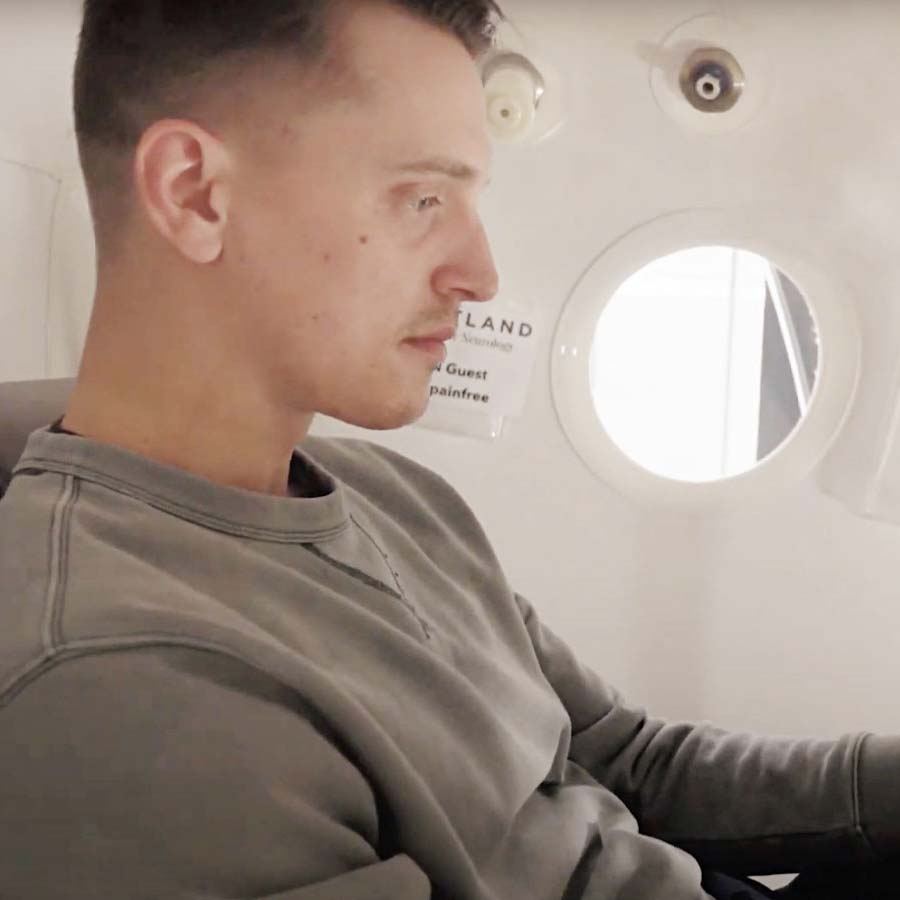
Athletes are constantly asking their bodies to recover. Whether it is from the accumulated stress of training and competition, a muscle or tendon injury, a fracture, surgery, concussion or simply the physical demands of a long season, recovery is ultimately a biological process. Damaged cells have to repair themselves. Collagen has to be produced and organized to heal the tendons and ligaments of our joints. Blood vessels have to recover. Inflammation and swelling have to resolve appropriately. New tissue has to be built, remodeled, strengthened, flexible and ultimately prepared to withstand the tremendous forces of competition again.
Every one of those processes requires energy. And one of the most fundamental ingredients required to produce that energy is oxygen.
This is what makes deep-pressure hyperbaric oxygen therapy (HBOT) so interesting for athletic recovery. HBOT doesn’t simply provide more oxygen. It changes the environment in which healing is occurring, while stimulating biological pathways involved in vascular repair, collagen production involved in tendon and ligament synthesis, stem and progenitor cell mobilization, inflammation reduction, cellular metabolism, neuroplasticity and tissue remodeling.[1–4] Hyperbaric creates the energy needed plus the substrate required for healing, not only accelerating healing dramatically, but also better.
When We Injure Tissue, We Also Injure Its Blood Supply
When we think about an athletic injury, we naturally focus on the structure that was damaged: the muscle, tendon, ligament, bone, cartilage, or joint. But trauma doesn’t occur in isolation, every tissue has neurological and vascular supply that enables it to work. The small blood vessels supplying those tissues can be damaged as well. Add inflammation, edema, vascular compression, and changes in microcirculation, and we can create a frustrating biological problem that stagnates healing.
The moment injured tissue requires additional oxygen and energy to repair itself can also be the moment its ability to receive those resources has been compromised.
Normally, the overwhelming majority of oxygen in our blood is carried by hemoglobin inside red blood cells. But hyperbaric oxygen therapy changes the physics of oxygen delivery. When an athlete breathes 100% oxygen under increased atmospheric pressure, oxygen physically dissolves directly into the plasma — the fluid component of blood, which is not typical at levels above 1-2%. In fact, under Hyperbaric oxygen therapy, oxygen levels can rise up to 1200% at 3 ATM of pressure, supplying low oxygen and circulation areas with the vital healing component needed — oxygen.
That is important because dissolved oxygen behaves differently from oxygen that is dependent upon hemoglobin transport. The enormous increase in oxygen partial pressure creates a much larger diffusion gradient from the circulation into the interstitial fluids surrounding our cells. Oxygen can therefore travel farther from functioning capillaries and into areas of injured, swollen, and hypoxic tissue where local microcirculation may be compromised. Not only stimulating healing of the injured tissue, but also the surrounding blood supply and neurological tissue.
In other words, HBOT can help overcome the oxygen-delivery limitations created by the injury itself.
And once oxygen reaches those tissues, it isn’t simply sitting there. Our mitochondria use oxygen to produce ATP — the cellular energy required to carry out repair. Not only that, repeated HBOT treatments stimulate healing and biogenesis of mitochondria, creating new and more resilient energy powerhouses that amplify athletic healing and performance. Fibroblasts require an adequately oxygenated environment to build collagen, which heals our soft tissue (muscles, ligaments, tendons, joints). Immune cells use oxygen during normal defense and cleanup processes, modulating inflammatory processes. New blood vessels have to develop. Extracellular matrix has to be constructed and remodeled. The injured tissue is metabolically busy and needs energy![2–4]
Healing requires energy. HBOT supplies the oxygen needed to produce that energy while simultaneously influencing the biology responsible for repair.
Then Something Else Happens
This is the part of hyperbaric oxygen therapy that I think is frequently under appreciated.
If HBOT only increased tissue oxygen while an athlete was inside the chamber, that alone would be physiologically significant. But repeated exposures to high oxygen under pressure also create cellular signals that can continue influencing the healing environment after the treatment has ended.
Changes in oxygen tension and reactive oxygen and nitrogen signaling influence gene expression and pathways involved in antioxidant defenses, inflammation, vascular function, angiogenesis (new blood vessel growth), collagen formation for repair of strain/sprains, and cellular repair at the deepest level. Research has demonstrated effects on VEGF and other signaling involved in blood-vessel growth, fibroblast activity and collagen synthesis, and mobilization of circulating stem and progenitor cells that create the ideal environment for healing.[1–4]
One of the most fascinating human studies demonstrated that circulating CD34+ cells (stem cells) approximately doubled after a single HBOT exposure at 2.0 ATA deep pressure and increased approximately eightfold over a course of 20 treatments. These cells are involved in vascular and tissue repair, and the response appears to involve nitric-oxide-dependent signaling within the bone marrow.[1]
Think about what that means from a recovery standpoint. We aren’t simply bringing more oxygen to an injury. We are changing the biological environment surrounding that injury and stimulating the body’s own repair systems.
That is an entirely different way to think about athletic recovery.
Rebuilding Tissue That Can Perform Again
For an athlete, simply getting rid of pain isn’t enough. The tissue has to function again.
Muscles have to generate force. Tendons have to transfer it. Ligaments have to stabilize joints. Bone has to withstand tremendous repetitive loading. Connective tissues need both strength and appropriate mechanical properties. Flexibility is required. HBOT helps all of those processes.
Collagen is fundamental to that rebuilding process, and collagen production is oxygen dependent. Experimental tendon and ligament studies have demonstrated increased Type I procollagen expression and collagen synthesis with deep hyperbaric oxygen exposure, with some studies also demonstrating improvements in mechanical properties of flexibility during healing. Human evidence across specific sports injuries is still developing, but the underlying physiology is extremely compelling and continues to be researched.[3,4]
A recent systematic review and meta-analysis of 10 studies involving 299 participants found that HBOT significantly accelerated recovery from exercise-induced muscle injury, with significant benefits also demonstrated specifically among elite athletes.[4]
The goal isn’t simply to accelerate the disappearance of symptoms. The goal is to create the healthiest possible tissue by stimulating the right environment for tissue to rebuild, remodel, and ultimately tolerate the demands being placed upon it again.
But What About the Brain?
When we talk about athletic recovery and performance, we can’t only talk about muscles, tendons, ligaments, and joints. Ultimately, every movement an athlete makes begins in the brain.
Muscle alone doesn’t create athleticism. The brain has to see where the ball is going, understand where the body is in space, integrate information from the visual and vestibular systems, regulate autonomic responses and blood flow, make a decision, and then send a precisely timed signal through the nervous system to the appropriate muscles. The faster and more efficiently those systems communicate, the faster the athlete can perceive, react, stabilize, move, and adapt.
That is why brain health is so important to athletic performance. Athleticism isn’t simply determined by how much muscle we have. It depends upon the enormous network of neurological connections controlling those muscles and how efficiently those networks communicate with one another.
The brain also has an extraordinary ability to change those networks. We call this neuroplasticity — the brain’s ability to create, strengthen, reorganize, and adapt its neurological connections in response to experience, rehabilitation, training, and injury.
But neuroplasticity isn’t magic. It is metabolically expensive.
Building and strengthening neurological networks requires energy. Neurons have to maintain electrical gradients, produce neurotransmitters, communicate across synapses, transport materials through axons, and remodel synaptic connections. Astrocytes, oligodendrocytes, microglia, endothelial cells, mitochondria, and the vascular system surrounding our neurons all participate in maintaining, repairing, and adapting those networks.
All of it requires energy. And that’s where HBOT enters the picture.
By dramatically increasing oxygen availability and the diffusion gradient into tissues, HBOT can increase oxygen delivery to areas where normal perfusion and metabolism may be compromised. In chronically injured brain tissue, researchers have identified regions that may remain viable but metabolically underactive or poorly perfused. Rather than thinking of these areas as necessarily lost forever, an exciting question has emerged: What happens when we restore the biological resources those cells need to function and adapt?[5]
HBOT research has demonstrated changes in cerebral blood flow and brain activity associated with improvements in neurological function in certain chronic brain-injury populations. The goal isn’t simply more oxygen while someone is sitting inside a chamber. The goal is to use repeated exposures to stimulate vascular, metabolic, inflammatory, and neuroplastic changes that can improve the environment in which the brain functions.[5–7]
A Concussion Creates an Energy Problem at Exactly the Wrong Time
This becomes incredibly important following concussion.
A concussion isn’t simply a “brain bruise.” The mechanical forces of the injury can disrupt neuronal membranes, axons, synaptic connections, glial cells, mitochondria, and the small blood vessels responsible for supplying the brain. This initiates a cascade of ionic shifts, excitatory neurotransmitter release, dramatically increased energy demand, mitochondrial dysfunction, inflammatory signaling, and disturbances in cerebral blood flow and neurovascular regulation.
The brain immediately begins trying to restore normal function. Sodium and potassium gradients have to be reestablished. Calcium has to be regulated. Cellular membranes and axons have to recover. Synaptic communication has to normalize. Inflammation has to progress toward resolution. Damaged networks have to reconnect and reorganize.
All of this requires tremendous amounts of cellular energy.
But here’s the problem: the injury can simultaneously damage the very systems responsible for delivering and producing that energy.
Researchers describe this as the neurometabolic energy crisis of concussion. Energy demand increases precisely when cerebral blood flow, neurovascular coupling, mitochondrial function, and cellular energy production may be disrupted.
Think about that from the perspective of an athlete. At exactly the moment the brain needs additional resources to restore function and reorganize its networks, its ability to deliver and utilize those resources may be impaired.
That is where hyperbaric oxygen therapy becomes incredibly interesting.
Creating the Biological Capacity for the Brain to Change
Deep-pressure HBOT dramatically increases dissolved oxygen in the plasma and creates a much greater oxygen gradient into tissues. But in the brain, the objective isn’t simply to provide more oxygen to neurons. It is to improve the biological environment surrounding the entire neurovascular unit — neurons, glial cells, mitochondria, blood vessels, and the cellular signaling systems that allow all of them to function together.
And this is why repeated treatments matter.
HBOT isn’t only about what happens to oxygen levels during a single treatment. Repeated hyperoxic exposures create biological signals that have been studied for their effects on cerebral perfusion, mitochondrial function, inflammatory signaling, angiogenesis, stem and progenitor cell mobilization, and neuroplasticity. The objective is to stimulate changes that extend beyond the time spent inside the chamber — improving the biological environment necessary for longer-term repair and adaptation.[1,5–7]
Human studies in chronic traumatic brain injury and persistent post-concussion symptoms have reported changes in cerebral blood flow, brain activity, white- and gray-matter microstructure, cognition, and quality of life following courses of HBOT.[5–7]
One imaging study is particularly fascinating. Patients with prolonged post-concussion symptoms underwent 60 HBOT sessions despite having sustained their injuries anywhere from 6 months to 27 years earlier. Following treatment, researchers reported significant increases in cerebral blood flow and blood volume along with changes in white- and gray-matter microstructure. Those changes were accompanied by improvements in memory, executive function, information-processing speed, and overall cognitive performance.[5]
Other research has looked even further out. A cohort of 154 patients included people whose traumatic brain injuries had occurred as long as 33 years earlier, with significant improvements reported across cognitive domains following HBOT.[6] More recently, researchers studied adults who had suffered traumatic brain injuries during childhood. Their injuries had occurred an average of more than 23 years earlier, yet significant improvements were reported in global cognition, memory, executive function, attention, and information-processing speed following a course of HBOT.[7]
That challenges an incredibly important assumption about the brain: chronic does not necessarily mean incapable of change.
The brain retains the capacity for neuroplasticity long after an injury. The question becomes whether it has the biological resources and the appropriate neurological input necessary to express that capacity.
Environment Determines Capacity. Input Determines Direction.
This brings us back to neuroplasticity.
The brain cannot reorganize without the biological resources to build, signal, and sustain new networks.
But oxygen and energy alone don’t tell the brain what network needs to change. That is where rehabilitation and training become so important. Visual and vestibular rehabilitation, balance training, reaction drills, strength and conditioning, cognitive training, and sport-specific movements repeatedly activate the neurological networks we want to strengthen.
Repeated, specific network activation provides the stimulus. Cellular energy and healthy biology provide the capacity to respond to that stimulus.
I think of it this way: the environment determines the brain’s capacity to change; the input determines the direction of that change.
This is why the combination of HBOT and high-quality neurological rehabilitation is so exciting. HBOT may help improve the vascular, metabolic, inflammatory, and cellular environment required for neuroplasticity, while rehabilitation provides the precise neurological input telling the brain which networks need to become stronger and more efficient.[5]
For an athlete, that concept extends beyond simply recovering from symptoms. Healthy neurological networks contribute to vision, balance, reaction time, coordination, autonomic regulation, decision-making, motor control, and the ability to rapidly adapt to a constantly changing environment.
Brain Health Is Also Mental Health
When we talk about optimizing an athlete’s brain, we aren’t only talking about reaction time, balance, visual processing, coordination, and decision-making. The same brain networks that allow an athlete to perform also influence mood, motivation, sleep, stress responses, anxiety, emotional regulation, and psychological resilience.
Mental health has appropriately become an increasingly important conversation in professional and collegiate sports. Athletes face enormous physical and psychological demands: injuries, pain, concussion, travel, disrupted sleep, pressure to perform, uncertainty about recovery, and the stress of competition itself. And when an athlete sustains a concussion or other brain injury, changes in mood, anxiety, sleep, irritability, motivation, and emotional regulation can become part of the neurological picture as well.
This is another area where the emerging research on hyperbaric oxygen therapy is becoming extremely interesting.
HBOT isn’t being studied simply as a way to make someone “feel better.” Researchers are investigating whether changing oxygen availability, cerebral perfusion, neuroinflammation, metabolism, and neuroplasticity can influence the neurological networks involved in mental health.[8,9]
A recent systematic review and meta-analysis examined 17 studies involving 920 adults and found encouraging results across depression, anxiety, and PTSD. Across the randomized trials, HBOT was associated with a large pooled improvement in depressive symptoms and a moderate effect on anxiety. Two sham-controlled randomized trials examining PTSD demonstrated a large pooled treatment effect. Interestingly, the analysis also identified a dose-related difference in depression: significant benefit was found with protocols using 2.0 ATA, while the lower 1.2 ATA exposure did not demonstrate the same effect. The authors appropriately emphasized that this remains an emerging field and that larger, standardized trials are still needed.[8]
The PTSD research is particularly fascinating because researchers aren’t only measuring questionnaires — they’re looking at what is happening inside the brain.
In a randomized controlled study of veterans with treatment-resistant PTSD, 60 HBOT sessions were associated with significant improvements in PTSD and depressive symptoms along with measurable changes in brain microstructure and function on MRI. The researchers interpreted these findings as evidence of neuroplastic changes occurring alongside the clinical improvements.[9]
A more recent randomized, sham-controlled trial examined 63 veterans with combat-associated PTSD. After 60 treatments at 2.0 ATA, PTSD scores decreased substantially in the HBOT group, and researchers also found improvements in depression. Functional MRI demonstrated increased connectivity within three major brain networks involved in cognition, emotional regulation, self-referential processing, attention, and behavioral responses: the default-mode, central-executive, and salience networks.[10]
That last finding is particularly important to me because it brings us directly back to neuroplasticity.
Mental health isn’t somehow separate from brain health. Thoughts, emotions, motivation, attention, stress responses, sleep, and behavior emerge from neurological networks communicating with one another. If those networks are affected by injury, altered metabolism, inflammation, abnormal perfusion, or disrupted connectivity, then improving the biological environment surrounding those networks becomes an incredibly interesting therapeutic target.
We see this connection in concussion research as well. In a randomized controlled trial of individuals with persistent symptoms following mild traumatic brain injury, 40 HBOT treatments were associated with significant improvements not only in post-concussion symptoms and cognitive measures, but also in depression, anxiety, PTSD symptoms, sleep, and quality of life compared with the control period.[11]
More recently, a 2025 double-blind randomized trial of people with persistent symptoms following brain injury found greater improvement in overall post-concussion symptoms with HBOT than sham treatment, with HBOT also producing improvements in anxiety, sleep difficulties, vestibular symptoms, and several other measures.[12]
For an athlete, this is an important distinction. Mental performance and physical performance don’t exist in separate bodies.
The brain controlling reaction time is also regulating emotion. The autonomic nervous system responding to competition is also influencing cerebral blood flow, heart rate, sleep, recovery, and stress responses. The networks involved in attention and decision-making interact with networks involved in motivation and emotional regulation.
That means supporting brain health isn’t only about recovering from concussion. It’s about supporting the biological system responsible for the athlete’s ability to think clearly, regulate stress, sleep, recover, make decisions, remain focused, and perform under pressure.
HBOT is not a replacement for psychological care, counseling, psychiatry, medication when appropriate, sleep optimization, or the tremendous value of a strong support system. Instead, this research opens another fascinating part of the conversation: Can we also improve mental health by improving the biological environment in which the brain is functioning?
Increasing oxygen availability. Improving cerebral perfusion. Supporting mitochondrial energy production. Influencing neuroinflammation. Stimulating angiogenesis. And creating conditions that support neuroplasticity.
For the athlete, those aren’t simply mental-health mechanisms or performance mechanisms.
They’re brain-health mechanisms.
The Goal Isn’t Just Recovery. It’s Protecting the Athlete’s Most Important System.
This conversation becomes even more important in sports where athletes experience repetitive head impacts or multiple concussions over the course of a career. Following concussion, there can be a period of physiological vulnerability even as outward symptoms begin improving. That is precisely why appropriate diagnosis, rehabilitation, biological recovery, and return-to-play progression are so important.
The goal should never be to use HBOT to return an athlete to competition before the brain is ready. The goal is to create the healthiest possible biological environment in which the brain can recover.
We want healthy neurons and synapses. We want healthy glial cells supporting those neurons. We want healthy mitochondria producing energy. We want healthy cerebral blood flow and neurovascular coupling delivering resources where and when they’re needed. We want inflammation appropriately regulated, and we want neurological networks capable of adapting to the extraordinary demands of high-level sport.
HBOT provides something fundamental to all of those processes: oxygen, energy, and biological signals involved in repair and adaptation.
Because ultimately, an athlete’s greatest piece of performance equipment isn’t their legs, shoulders, hands, or lungs.
It’s their brain.
And just like the rest of the body, the brain requires oxygen, energy, circulation, and the biological resources necessary to repair, reorganize, and adapt.
Recovery Is Part of Performance
Professional sports have become extraordinarily sophisticated. Teams measure training load, force production, sleep, hydration, heart-rate variability, nutrition, biomechanics, blood chemistry, strength, speed, and countless other variables looking for small improvements in performance and recovery.
But underneath every one of those measurements is biology.
Rehabilitation is asking tissue to adapt. Strength training is asking tissue to adapt. Nutrition provides materials for that adaptation. Sleep creates an environment in which recovery can occur. Sports medicine identifies and manages the injury.
Hyperbaric oxygen therapy adds something different to that equation: it directly changes oxygen availability and the biological environment in which those recovery processes are taking place, so they can adapt at an accelerated and overall higher rate.
That is why I believe HBOT deserves a much larger conversation in professional athletics. It isn’t a replacement for excellent orthopedic care, rehabilitation, strength and conditioning, nutrition, sleep, or appropriate return-to-play progression. It is a way of supporting the biology underneath all of them so that athletes can become their best version and stay on the pitch, court, field, or ice.
When an athlete is injured, we want the damaged tissue to heal. We want the microvasculature supplying that tissue to recover. We want adequate cellular energy. We want collagen synthesis and appropriate remodeling. We want inflammation to progress toward repair. We want to regenerate neurological connections. We want new blood vessels to develop where needed, and we want the body’s own repair mechanisms functioning as effectively as possible.
HBOT supplies the energy while helping create the biology required to use that energy for healing.
That is the real opportunity.
Because ultimately, some injuries need more. We create the environment in which the athlete’s body can heal itself, recovering quicker, and function at its best.
Selected Research
1. Thom SR, Bhopale VM, Velazquez OC, Goldstein LJ, Thom LH, Buerk DG. Stem cell mobilization by hyperbaric oxygen. Am J Physiol Heart Circ Physiol. 2006;290(4):H1378-H1386. doi:10.1152/ajpheart.00888.2005.
This supports your statement that circulating CD34+ cells doubled after one 2.0 ATA exposure and increased approximately eightfold over 20 treatments, as well as the nitric-oxide mechanism.
2. Ishii Y, Ushida T, Tateishi T, Shimojo H, Miyanaga Y. Effects of different exposures of hyperbaric oxygen on ligament healing in rats. J Orthop Res. 2002;20(2):353-356. doi:10.1016/S0736-0266(01)00094-8.
This is actually stronger and more specific than the vague #2 we previously had. It directly supports the collagen/extracellular-matrix discussion; 2.0 ATA for 60 minutes was the most effective of the tested exposures.
3. Mashitori H, Sakai H, Koibuchi N, Ohtake H, Tashiro T, Tamai K, Saotome K. Effect of hyperbaric oxygen on the ligament healing process in rats. Clin Orthop Relat Res. 2004;(423):268-274. doi:10.1097/01.blo.0000128970.27390.f5.
4. Luo X, Yu Y, Zhang S, Qi F. Effects of Hyperbaric Oxygen Therapy on Exercise-Induced Muscle Injury and Soreness: A Systematic Review and Meta-analysis. Arch Phys Med Rehabil. 2026;107(3):522-532. doi:10.1016/j.apmr.2025.07.017.
5. Tal S, Hadanny A, Sasson E, Suzin G, Efrati S. Hyperbaric Oxygen Therapy Can Induce Angiogenesis and Regeneration of Nerve Fibers in Traumatic Brain Injury Patients. Front Hum Neurosci. 2017;11:508. doi:10.3389/fnhum.2017.00508.
Verified: 15 PPCS patients, 60 sessions, injuries 6 months to 27 years earlier; significant increases in CBF/CBV, DTI changes, and improvements in memory, executive function, processing speed and global cognition.
6. Hadanny A, Abbott S, Suzin G, Bechor Y, Efrati S. Effect of hyperbaric oxygen therapy on chronic neurocognitive deficits of post-traumatic brain injury patients: retrospective analysis. BMJ Open. 2018;8(9):e023387. doi:10.1136/bmjopen-2018-023387.
7. Shabi Shlifer A, Suzin G, Shorer R, Lang E, Finci S, Elman-Shina K, Doenyas-Barak K, Efrati S. Hyperbaric oxygen therapy improves post-concussion symptoms in adults with childhood traumatic brain injury: a retrospective cohort study. Front Neurol. 2025;16:1641033. doi:10.3389/fneur.2025.1641033.
Verified: mean time since injury 23.6 ± 9.3 years, with significant improvements in global cognition, memory, executive function, attention, and processing speed.
8. Al-Shamali HF, Shocker K, Thakkar J, Lin Q, Janssen-Aguilar R, Lou W, Granek J, Rhind S, Dunkley BT, Vallee I, Crouzat M, Jetly R, Bhat V. Effectiveness and safety of hyperbaric oxygen therapy for psychiatric disorders: A systematic review and meta-analysis. Psychiatry Clin Neurosci. 2026;80(9):714-729. doi:10.1111/pcn.70077.
Now we have the complete publication details. Verified: 17 studies/920 adults, nine RCTs; large pooled depression effect, moderate anxiety effect, and large pooled PTSD effect from two sham-controlled RCTs. The paper also reports benefit at 2.0 ATA but not 1.2 ATA in the depression dose analysis.
9. Doenyas-Barak K, Catalogna M, Kutz I, Levi G, Hadanny A, Tal S, Daphna-Tekoha S, Sasson E, Shechter Y, Efrati S. Hyperbaric oxygen therapy improves symptoms, brain’s microstructure and functionality in veterans with treatment resistant post-traumatic stress disorder: A prospective, randomized, controlled trial. PLoS One. 2022;17(2):e0264161. doi:10.1371/journal.pone.0264161.
This was the incomplete reference I was concerned about. It is the study underlying your paragraph about treatment-resistant PTSD, 60 HBOT sessions, clinical improvement and accompanying MRI/DTI changes.
10. Doenyas-Barak K, Kutz I, Lang E, Assouline A, Hadanny A, Aberg KC, Levi G, Beberashvili I, Mayo A, Efrati S. Hyperbaric Oxygen Therapy for Veterans With Combat-Associated Posttraumatic Stress Disorder: A Randomized, Sham-Controlled Clinical Trial. J Clin Psychiatry. 2024;85(4):24m15464. doi:10.4088/JCP.24m15464.
Verified: 63 randomized veterans; 60 sessions of 100% oxygen at 2.0 ATA versus sham; significant PTSD and depression improvements and increased connectivity in the default-mode, central-executive and salience networks.
11. Harch PG, Andrews SR, Rowe CJ, Lischka JR, Townsend MH, Yu Q, Mercante DE. Hyperbaric oxygen therapy for mild traumatic brain injury persistent postconcussion syndrome: a randomized controlled trial. Med Gas Res. 2020;10(1):8-20. doi:10.4103/2045-9912.279978.
Verified: 40 treatments; improvements reported in post-concussion symptoms, memory/cognition, depression, anxiety, PTSD symptoms, sleep and quality of life versus the no-treatment control period.
12. Weaver LK, Ziemnik R, Deru K, Russo AA. A double-blind randomized trial of hyperbaric oxygen for persistent symptoms after brain injury. Sci Rep. 2025;15(1):6885. doi:10.1038/s41598-025-86631-6.
Verified: 49 enrolled/47 analyzed; 40 HBOT versus 40 sham sessions. At 13 weeks the HBOT group had a significantly greater improvement in overall NSI score and also improved in anxiety, sleep difficulties, vestibular complaints and olfaction.