The human brain is the most energy-demanding organ in the body.
Although it makes up only about 2% of our body weight, it consumes nearly 20% of the body’s oxygen every day simply to function….on a good day. After a concussion or traumatic brain injury (TBI), those energy demands increase dramatically as the brain begins the process of repair.
The Brain’s Energy Crisis
Following a concussion, the brain enters what researchers often refer to as an energy crisis.
The injury can damage brain cells and the delicate connections between them while also injuring the tiny blood vessels that supply oxygen and nutrients. As blood flow becomes impaired, oxygen delivery decreases, creating areas of relative hypoxia (low oxygen).
The result is a challenging cycle.
After injury the brain requires more energy to heal, but has less oxygen available to produce that energy. This mismatch can contribute to persistent symptoms such as headaches, dizziness, brain fog, fatigue, elevated heart rate (POTS), eye tracking errors, double vision, difficulty concentrating, memory problems, sleep disturbances, and slowed thinking.
Why Oxygen Matters
Every cell in the brain relies on oxygen to produce ATP—the body’s primary source of cellular energy.
Without adequate oxygen, brain cells struggle to repair damaged tissue, restore healthy function, and build new connections. While the brain has an extraordinary ability to heal, it needs the right environment to do so.
Providing injured tissue with abundant oxygen helps support the natural healing processes that are already built into the body.
How Hyperbaric Oxygen Therapy Works
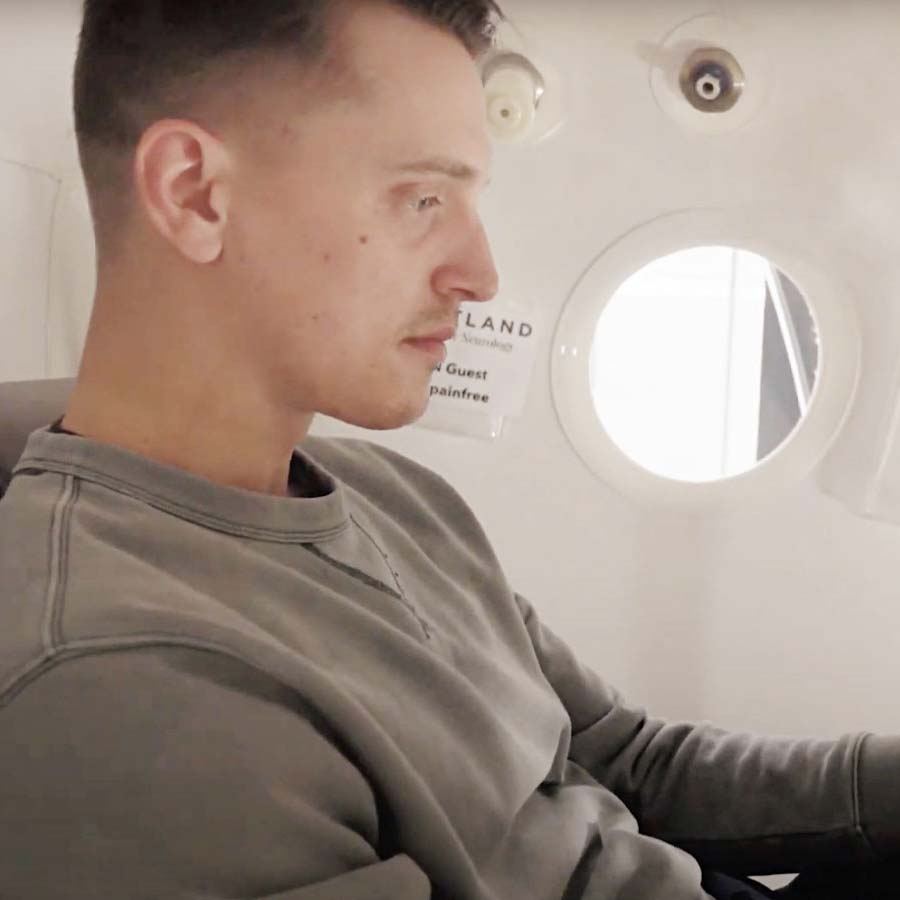
Medical-grade Hyperbaric Oxygen Therapy (HBOT) enhances the body’s ability to deliver oxygen where it is needed most.
Inside a hard-sided hyperbaric chamber, atmospheric pressure is increased while you breathe 100% oxygen. This combination allows oxygen to dissolve directly into the plasma of the blood—not just attach to red blood cells.
Because dissolved oxygen can travel more efficiently into injured tissues with compromised circulation, oxygen delivery throughout the body can increase by up to 1,200% compared to breathing room air under normal conditions.
This increase in oxygen provides the fuel cells need to produce energy, repair tissue, and restore normal function.
More Than Just Oxygen
Research has shown that hyperbaric oxygen therapy may support healing through several important biological mechanisms, including:
- Increasing oxygen delivery to injured tissues
- Reducing inflammation throughout the brain and body
- Stimulating stem cell mobilization involved in tissue repair
- Encouraging the growth of new blood vessels (angiogenesis)
- Supporting mitochondrial function and cellular energy production
- Enhancing neuroplasticity and the brain’s ability to reorganize and heal
- Improving circulation and tissue oxygenation
- Helping regulate autonomic nervous system function
These effects don’t simply mask symptoms—they help create an environment where the body’s natural healing processes can function more effectively.
Healing From the Inside Out
Hyperbaric Oxygen Therapy is unique because it works at the cellular level.
Rather than targeting a single symptom, HBOT provides the body with one of its most essential healing ingredients: oxygen. By improving oxygen availability throughout the brain and body, HBOT helps support recovery, reduce inflammation, improve energy production, and promote tissue repair.
Whether recovering from a concussion, traumatic brain injury, stroke, chronic inflammation, or another complex condition, increasing oxygen delivery may help restore the conditions your body needs to heal naturally.
At New England Hyperbarics, our mission is simple: provide advanced, medical-grade Hyperbaric Oxygen Therapy that helps your body and brain recover, repair, and perform at its highest potential—one breath at a time.